Sunday, November 9, 2014

Turtle Wife News Nov and Dec 2014

================================
Confessions of a Turtle Wife is Free on Kindle Nov 9 to 11
 41oLth3lZcL._BO2,204,203,200_PIsitb-sticker-v3-big,TopRight,0,-55_SX278_SY278_PIkin4,BottomRight,1,22_AA300_SH20_OU01_
 Download your copy at http://goo.gl/zbKXOB !
================================
Turtle Wife's free newsletter,
TURTLE STORIES, NEWS & VIEWS,
is published bi-monthly, on no set date.
I will never sell, trade or give away your
e-mail address — period. Feel free to forward this
newsletter to friends!

Auto-Subscribe and Auto-Unsubscribe

** TO SUBSCRIBE to this newsletter **
Send a message to newsletter-subscribe@turtlewife.com.
Wait for a confirmation message in your e-mail. Simply
Reply to the message (no text necessary), and your address
will be automatically added to the mailing list.

** TO UNSUBSCRIBE **
Send a message to newsletter-unsubscribe@turtlewife.com.
Reply to the confirmation message in your e-mail (no text
necessary), and your address will be automatically removed.

Should your e-mail address change, please
unsubscribe, then re-subscribe with
the new address.
================================
All links in each issue are live and working at the
time the newsletter is emailed to you—however, be
aware that some sites take down their links within a
week.
=================================
Follow Turtlewife on Facebook to read many
of the stories below and more. Turtle news
posted daily! Also follow Turtlewife
on
Twitter @theturtlewife
================================
WORLDWIDE TURTLE STORY ROUNDUP
================================

galapagos-tortoise

Photo: James P. Gibbs, SUNY-ESF
NEAR-EXTINCT GALAPAGOS ISLAND TORTOISES
MAKE COLOSSAL COMEBACK

by Tanya Lewis, Staff Writer. Oct. 28, 2014

Giant tortoises that were once driven to the brink of extinction
on a tiny Galápagos island have made an amazing comeback,
a new study reveals.

The tortoise population on the island of Española dwindled to
just 15 animals in the 1960s, because of damage to their
habitat caused by feral goats. Then, about 40 years ago,
captive-bred tortoises were released on the island, and now
there are about 1,000 of them living and breeding in the wild.

"It's one of the greatest conservation success stories," said
James Gibbs, a conservation biologist at the SUNY College
of Environmental Science and Forestry in Syracuse, New York.
Gibbs led the study published today (Oct. 28) in the journal
PLOS ONE.

READ MORE.
===============================
1415204328-4834b7ea12b7a0e4d465f09e6469d634-1038x576
28 tortoises smuggled into UK are now
living at Blackpool Zoo

Known as the Sulcata Tortoises, these tiny creatures
are all under a year old and just a few inches long. But
within time, these relatively rare tortoises could get as
big as 10 stone and live up to a whopping 100 years.

“We have built a fantastic relationship with Borderforce
over the years and work closely with them to rehome
any seized reptiles,” John Paul Houston, assistant head
of the Animal Department at Blackpool Zoo, said.

Read more.
================================
561-1p2DH1.AuSt.91
Boom in shipments of turtles overseas could lead to
protective measures. 

WASHINGTON — The U.S. government is proposing a
new level of protection for certain freshwater turtles,
concerned that a massive increase in overseas demand
for the reptiles could hurt their long-term prospects.

The proposal from the U.S. Fish and Wildlife Service involves
four species: the Florida softshell, the smooth softshell,
the spiny softshell and the common snapping turtle.

While none of the four species is at risk of extinction,
federal officials and biologists say that a booming international
trade in turtles had prompted concerns about the animals’
long-term survival.

Read more.
================================

OO08_TURTLE__2192818f
Reptiles play vital role in protecting ecology

Hitherto viewed by many here and elsewhere as
an insignificant part of the fauna of the Blue Mountains,
reptiles have of late been generating considerable
interest among not only wildlife enthusiasts and students of
wildlife biology but also the public on account of growing
awareness about their role in protecting this ecologically
fragile area.

===============================
sulcata
Mystery of missing giant tortoise has happy ending
in Daytona Beach

Nicholas Montagna was flummoxed.

One of his two giant tortoises went missing Sunday, leaving
Montagna, his family, neighbors and other in the community
searching for answers, and for Cecil. And even though the
100-lb-plus tortoise is safe and sound once again, his
disappearance remains a mystery.

Read more--about yet another sulcata tortoise lost
and found.

===============================

Burma_female

Northern River Terrapin Acquired
in Myanmar

Efforts to save the critically endangered Northern
River Terrapin (Batagur baska) in Myanmar recently took
a great leap forward when the TSA/Wildlife Conservation
Society (WCS) Turtle Team was granted permission to
transfer a large adult turtle living in a pagoda pond to
more equitable quarters.

The pond, at Botataung Pagoda in downtown Yangon, has
been home to the turtle since at least 1987, but probably
longer. Although its origins remain clouded in mystery, we
suspect the turtle was brought from the lower Ayeyarwady
Delta many years ago and released into the pond by a traveling
pilgrim.

The symbolic release of fish, turtles, and small birds
is commonplace at Buddhist temples throughout Asia; by
liberating a captive animal, a person is believed to earn
karmic merit.

Read more.
================================
Here's a quiz I never expected to see:
Which species of sea turtle are you?
I got Green Sea Turtle. Ed.


safe_image.php

Where do you fit in with the seven species of sea turtles?
Find out from the experts at Sea Turtle Conservancy...
Community Post: Which Species Of Sea Turtle Are You?
www.buzzfeed.com

================================
safe_image.php
A Turtle Mystery in NY’s Jamaica Bay
Something strange is happening to the diamondback terrapin
turtles of Jamaica Bay, though there’s some question as to
precisely what that strange thing means.

“Nobody has ever seen anything like this before,” said Russell
Burke, a Hofstra University ecology professor and one of the
foremost experts on Jamaica Bay’s population of diamondback
terrapin turtles, the largest concentration in the state.

“It’s a puzzle.”

Read more.
================================

26GEORGE2-articleLarge

Lonesome George, Immortalized
Natural History Museum Displays
a Giant Tortoise
Extinction is forever, as the conservationists say.

Desiccation, it turns out, is only nearly so.

The giant Galápagos tortoise known as Lonesome George,
whose death in 2012 signified the end of his subspecies,
has been preserved for posterity in a one-of-a-kind effort
by expert taxidermists. But the work took about half a
year longer than expected, in large part because the tortoise
stubbornly refused to dry out.

“That’s always the great unknown, how long the animal
will take to dry,” said George A. Dante Jr., whose studio,
Wildlife Preservations, in Woodland Park, N.J., was given the
task of preparing the 170-pound, five-foot-long tortoise.

Lonesome George — now fully dry and fully preserved, posed
as if he were looking for his favorite food, cactus — is on
display until early January at the American Museum of Natural
History, one of the partners in the effort.

Read more.
================================
Now available as e-books:
index

Why Being a Reptile Lover Means Always
Having to Say "I'm Sorry
."

And:
51doMajomoL._BO2,204,203,200_PIsitb-sticker-v3-big,TopRight,0,-55_SX278_SY278_PIkin4,BottomRight,1,22_AA300_SH20_OU01_
You Know You’re a Herper
WHEN YOU DREAM IN GREEN

================================

*** ORGANIZATIONS THAT HELP TURTLES ***
HERPDIGEST: A Weekly Electronic Newsletter on the
Latest News on Reptile and Amphibian Science and
Conservation. A nonprofit 501(c)(3) organization.
Allen Salzberg, Editor/Publisher www.herpdigest.org

THE NEW YORK TURTLE & TORTOISE SOCIETY:
A nonprofit 501(c)(3) organization dedicated to the
conservation, preservation of habitat, and the promotion
of proper husbandry and captive propagation of turtles and
tortoises.  www.nytts.org

TURTLE RESCUE OF LONG ISLAND: A non-profit
501(c)(3) organization that works to rehabilitate native
turtles and find homes for those that cannot be released.
Also takes in and adopts out turtles and tortoises of all
species that can no longer be kept for whatever reason.
Location, Long Island, New York www.turtlerescues.org

INDIANA TURTLE CARE in New Palestine, Indiana, is
a nonprofit organization dedicated to rehabbing
injured and unwanted turtles. www.indianaturtlecare.com
Contact: zooperior@comcast.net
================================

Find Great Gifts for Turtle Lovers 
at  the Turtlewife Store!
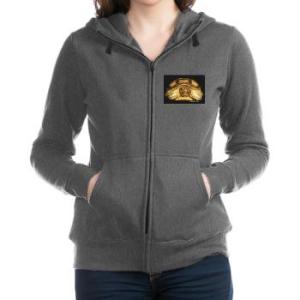
 lively_red_eared_slider_round_cufflinks proud_turtle_lover_womens_long_sleeve_shirt_34_sleeve cp_sulcata_baby_copyjpg_womens_zip_hoodie bah_humbug_santa_turtles_food_container

Dozens of original turtle and tortoise images—on
mugs, caps, baby clothes, tee-shirts, , Cufflinks,
PJ’s and much more!

================================
I will never sell, trade, or give away your
e-mail address—period.

Read turtle news on FACEBOOK!
Go to https://www.facebook.com/turtlewife
For a daily dose of turtle articles
================================

CONFESSIONS OF A TURTLE WIFE is
available as an e-bookinstant download

Free Nov 9, 10 & 11, 2014!

41oLth3lZcL._BO2,204,203,200_PIsitb-sticker-v3-big,TopRight,0,-55_SX278_SY278_PIkin4,BottomRight,1,22_AA300_SH20_OU01_ 

CONFESSIONS OF A TURTLE WIFE:
Learn how to live with a hobby-obsessed spouse!

Read Chapter 1 at www.turtlewife.com.
214 pages. Paperback at Amazon or B&N.

*******************************************
Turtle Wife's Newsletter
(c) 2014 Turtlewife.com

Monday, September 9, 2013

Guest Blog Post by Richard Oram


The Princess and Me
by Richard Oram

People give me turtles, most often Red Eared Sliders. So happened last October, as a referral from the Nature Center which doesn't want them. Sliders are by far the most common turtles in the US; they are the old Woolworth's and ones-you-can-now-get- in Chinatown kind. They are not native to the northeast so the Nature Center, eschewing invasive species as they do, refers people who lose interest in their pet turtles to me.

About October 15 a lady calls and then brings a Slider, a nice big one, perhaps 15-20 years old. Who knows how long it had been captive, likely its entire life.  My outside turtles, as opposed to the small inside ones, of course, live in an enclosure until it gets too cold. (The "turtle pen" wasn't designed right... not deep enough for hibernation as we learned in a very unfortunate way, and that's all I'll say about that.)  

So this new "Big Guy" joined the other six, and it being chilly October, they all begin the hibernation thing; at that point it's just that they are relatively inactive, popping up from the water only on warmer days, not eating anymore, kind of packing up for the winter. By late November I drain the water and carefully poke around to get them out. All seven were there, all fine it seemed. They then winter in an enormous tub in the garage, where it stays 40 degrees or so, happy as clams if you will, year after year, coming up on 10 years now. 

In March on a nice day the garage tub gets drained and out they come.  My ritual is to place them all in a corner of the pen and watch as one then the next and the next decide that it's safe to do more than sleepily poke a head out of its shell.  Before long they have all plopped into the water, and basically hit the snooze button -- the water is still cold, like November, so I don't expect them to show themselves again until April.

So it's April.  The best spring day yet always enables an inventory, as it did this year.  But that Big Guy was sluggish, like barely getting himself to a rock and the sun, whereas all the others were basking as if it was Miami Beach.  He wasn’t swimming and floated in a strange way.  I had increasing concern.

As with other sickies, I activate the hospital tank where the water is warmed with a heat lamp… like summer time when the basking is easy.  He seemed to like that but sure didn't look good.  His head was drooping onto the rock, his "lips" were ghoulish black, and I honestly thought he was not going to make it.  Turtles are really hardy though, and the biggest threat to captive ones is just not being taken to the vet soon enough when they are sick. I learned that, sadly. So I put the poor thing into a bucket and off to the vet we went; that was Friday.

First thing she said was Big Guy was female. While we talked turtle for a while, the visit was really just an exam and her specific advice was just to heat her up more, so I used the aquarium heater from the baby turtle tank to raise the hospital tank water to 80 degrees. But “heat her and call me in the morning” didn’t make me confident that we’d have a quick turnaround, and as other vets had given my sick turtles xrays, I knowed-it-all (the internet is never wrong) and went back to the vet on Saturday.   She was admitted for overnight observation and tests. 

While the situation was grave, when checking her in there was some joking about her need for a new name:  Big Guy wasn’t right for a female so we renamed her Princess, given that she needs such special attention.

The next day the vet reports that she took x-rays, which showed no infection or congestion.  She also gave her vitamins, and when I arrived to take Princess home, the vet provided me with a powder that I had to mix with water to make into a pancake-like goo to put in a plastic syringe to feed her.   And she needed more heat.  So in addition to the basking lamp, the heater went to the max, making the water about 90 degrees. 

I also covered the tank to keep more heat and humidity in, and put a light bulb under the rocks making it like a sauna.  With the heat, light and humidity, the hospital tank became an ICU. I was hopeful that we had the right protocol, and the vet and I agreed that the big hurdle was to get her eating. But the pancake stuff wasn’t to her liking, not at all; she’d hiss, snap at the syringe as it got close, and retreat into her shell when her attack failed.   

She’d also pee—that seems to be a last defense:  if a turtle gets picked up by a raccoon for example, the pee is supposed to make the attacker change its mind.  So this seemed really torturous but actually, it was good that she’d do the defense stuff, as otherwise there really wasn’t much life in her. When I’d finally put the goo in her mouth, she’d get really upset and start clawing, i.e., abandon the retreat defensive mode and basically freak out – ever seen a turtle gag? 

Most of the goo would just squish out of her mouth.  After a few days of at best very limited success with the syringe feeding, I thought maybe she’d go for some turkey, but that didn’t appeal either.  (Aside: when I was buying the turkey, looking at the “ends” section, I overheard a lady saying to her husband, “The turtles will like this” which of course led to conversation and soon after their visiting me, but that’s another story.)

With no evident progress or cooperation from Princess, I decided to be more aggressive. I reverted to the goo and syringe but came at it from a different angle. I held her upright and then squished the goo into her mouth, letting gravity help. It looked like water boarding and she liked it even less. I felt bad even knowing I might be helping her, but it seemed like desperate times calling for desperate measures. I continued this for a few days.

In the same time I got an infrared bulb (IVB) that is recommended for reptiles kept indoors, because they really do need sunlight and vitamin D.  Basking isn’t just about heat. It’s likely that Princess, in her earlier captive life, had a vitamin deficiency; even if a turtle is near a window it doesn’t get the infrared rays because the glass screens it out. Most people have no idea what they really need.

Yes!  She began to perk up in a couple days.  Was it the heat, IV light, humidity, vet’s vitamins or the feeding?  I think it was the feeding, but whatever, we were making progress.  After 3 or 4 more days, the next phase was to get off the goo, which I imagine she appreciated, especially because I began to feed her shrimp.  She was tentative about it at the start, she was very timid and still is skittish, but a couple days of shrimping and she was a new woman. Trying to be cute I got her to take the shrimp from my hand; “I can even get a princess to eat out of my hand,” I said with pride. Real pride… I was really proud that I seemed to have saved Princess. 

Her black lips were gone, she’d bask with her head up, and bask less. I made the water deeper to force her to swim more, and she was good with that. When the shrimp ran out I got more (we had shrimp for dinner twice that week, a lunch too), but the next step was to transition her back to turtle food.  I had a fresh can and without a pause she started eating that. While you’re only supposed to feed turtles twice a week, she’s chowing every day. Last night she got some salmon. A bit curious is that there’s yet to be much poop in the tank, but I guess that will come in good time and I’m not impatient for that. But everything about her looks great now. 

A next step is to re-socialize her. That could have issues too as she probably lived alone for many years.  Maybe that played in to her recent issues… not playing well with others. On the vet’s advice I’m leaving her in the hospital until it gets quite warm outside, i.e., avoid another harsh transition. But I’m thinking about having a visitor, maybe supervised visitation by a couple of the babies because even one more big one in the hospital, despite it being a 40 gallon tank, would make it too crowded and stressful. They are social creatures; a sickie a few years ago – Tortellini – got a lot better when we brought in a friend.  Turtles get depressed?

I’ll say this as a conclusion:  “Who knew?” or “You never know.”

That is, when a new pet comes you just don’t know their history. It’s an adoption as opposed to a birth.  But a good assumption is that they haven’t been cared for well. Another tangent is that this year, with the help of my turtle friends from the turkey department, there’s a turtle egg gestating outside. I’m not optimistic but maybe next year Princess will do me a good turn and, well, getting captive turtles to successfully breed is a challenge; hatchlings are the Holy Grail.      

So there you go, Princess and me. Spring 2013, the year of the Princess. Love conquers all.             

Tuesday, July 17, 2012

How to Meet a Turtle Man—A Match Made in New York Magazine

A typical Sunday morning at our house.
After meeting Allen, life changed in ways I never could have predicted
 
by Anita Salzberg

I met my husband through a personal ad I placed in New York Magazine in the 80s. I was tired of meeting unavailable men at bars, parties, and summer shares. Not only was I looking for a long-term romance, I wanted to be in charge for a change.

The personals seemed ideal. How wonderful to pick and choose, rather than to be picked and chosen. How delightful to receive letters from dozens of men, all begging to go out with me.

But although I’m a copywriter, writing an ad for myself didn’t come easily. A friend fine-tuned my all-too-modest first draft to read: Spirited lady writer (30, 5’4”). Attractive, fun, resourceful. Seeks friendship and romance with unafraid man, 28-40, who possesses intelligence, warmth, confidence, and wit. Note/phone. Photo optional.

These words translated into six printed lines (cost: $153). My ad would run in one issue, and the magazine would forward responses for six weeks.

The morning the magazine hit the stands, I found my ad, “Spirited Lady Writer,” sandwiched between “Voluptuous Blond Blue-Eyed Exec” and “Shapely, Super, Petite.”

Despite the competition, I felt hopeful.

A week later—success! Four letters arrived in a narrow manila envelope. The second week, a thicker envelope brought 15 letters. Ten letters showed up the third week. Eventually, I received 40 responses.

I divided them into three categories. The first, “Barf,” consisted of communications best chucked straight into the trash. Thankfully, there were just two of these. The first writer wrote—in oversized, Son-of-Sam handwriting—that he had a doctorate in lust and would love to help me get my advanced degree. The second writer observed that it was a shame people had lost their prehensile tails because tails would be incredibly kinky in bed.

My second category, “Boring,” were letters that were nice, but dull; very dull. “Hi, my name is Bill,” a typical “Boring” letter read. “I’m an accountant /lawyer /computer programmer. I work for ABC/EFG/XYZ Company. I live in Brooklyn /Queens /New Jersey. In my spare time, I enjoy playing baseball /basketball /tennis. I liked your ad and I’d love to meet you.”

One such writer, an insurance broker, sent a photo of himself standing in front of a garage. My roommate, Sara, said: “He’s not bad looking and he has a car. Call him!” But imagining a dry-as-dust date discussing actuary tables, I declined.

My third category, “Best,” consisted of letters that were intriguing. Intelligent. Thoughtful. Funny.

There were about ten of these, including Allen’s. One read simply: “I’d like to have a few more attractive, fun, resourceful people in my life. Please call me.”

I would have, but the writer’s picture showed him to be more than twenty years my senior, and I felt uncomfortable with the age gap.

Instead I called “Jack,” a computer programmer who lived in Chelsea. We met for a drink. The evening went well until Jack mentioned that he answered the personals every week. That bothered me a bit, but not too much. After all, I read the personals each week. Before placing my ad, I’d answered a few. (The result: one lukewarm date.)

What troubled me was Jack’s admission that he replied to twenty ads at once.

“With my computer,” he boasted, “I can turn out hundreds of copies of the same letter.” (PCs had recently arrived on the scene.)

So much for Jack.

Allen’s letter had also arrived the first week. It was warm and funny: I am a college‑grad, which helps me a lot when I play Trivial Pursuit, and that’s about it…I’m well‑read, literate—I think I’m going to blush; no, I’m not. Loyal, brave, trustworthy….

“You’ve got to call this one,” Sara said. I agreed.

Allen’s picture showed him leaning against a door in his apartment, dressed in jeans, a white shirt, a vest and a fedora. I decided he had warm eyes.

Sara had a different take on Allen’s picture.

“He’s wearing a hat,” she said. “That means he’s bald.”

Allen's "Personals" picture

I called Allen that night. After chatting for fifteen minutes, we arranged to meet for a drink that Sunday. I chose a restaurant across the street from my apartment. As Sara and I watched out a window, we’d see Allen arrive and size him up.

Sure enough, at 8:30 p.m., a man stopped in front of the restaurant. He looked around, shrugged, and began reading a book he drew out of the pocket of his blazer. He wasn’t wearing a hat.

“He has hair!” Sara exclaimed.

I hurried outside and across the street.

Allen gave me a not-so-subtle once over and pulled a long face. A test had taken place—and I’d failed. I later learned that it consisted of a single (and, Allen insisted, unconscious) comparison: Does she look like Leslie Caron in Gigi? Allen’s ideal woman was a dark-haired gamin-type. My red hair and freckles hadn’t made the grade.

I pulled my own long face in response. Allen was okay looking (his dark hair was starting to recede a bit) but he was no Michael Douglas. I almost ended the evening right then, but I was in a new “three dates and you’re out” mode. Still, seeing Allen’s downcast expression, the quiet, romantic restaurant I’d chosen seemed too quiet and too romantic. I suggested a noisier, brightly lit bar.

Once there, to my relieved surprise, we chatted easily for an hour. Then Allen abruptly pushed back his chair. “It’s late,” he said. “You probably want to go home and relax, since you have to work tomorrow.”

Uh-oh, my first impression had been right. I’d definitely never hear from this one again.

I walked Allen to the cross-town bus stop and wrote him off.

Two nights later, to my surprise, he called to ask for a second date. I figured he was also in a “three dates and you’re out” frame of mind. If he could give me another chance, I could do the same for him. We made plans for that Friday night—a movie in Greenwich Village.

While waiting for the film to begin, Allen mentioned that he answered the personals every single week.

“I have a strategy,” he said, as I shot up straight in my chair, remembering Jack, the computer programmer. “I answer the ads I like the day they come out. Otherwise, the woman I’m writing to might be involved by the time she gets my letter. With my computer,” he added, “I can answer lots of letters each week.”

I leaned as far away from Allen as I could without falling over into the next seat.

Allen continued, oblivious to my sudden chill, “But I write variations on each letter—I respond to what each woman says in her ad. I like to have fun with my letters. And I’ve gone out with some really nice people through the ads. My last relationship with someone I met through the personals lasted six months.”

I moved back to the middle of my chair.

After the movie, we ate dessert at a nearby café. We talked for hours about art, politics, the theater, ourselves, our families. Allen liked to talk, but he also listened attentively. (And he never mentioned the word “turtle” once.)

We headed uptown at midnight. I worried that the subway would be deserted and creepy, so we walked to a nearby bus stop. The night had turned blustery. I shivered under my lightweight coat and wool dress.

“Let’s warm up over that subway grate,” I suggested. We hurried over to it. Ah, yes, mild air. That was better.

Allen later told me he thought there was something sensitive and sexy about my wanting us to warm up over the grate.

“That moment,” he said, “I knew you were down to earth and considerate, and I wanted to see you again.”

I didn’t take his point. The wind was frigid; subway grates are warm. What woman would have parked her date on the sidewalk while she unfroze her toes alone?

The bus arrived. By the end of that ride, Allen was begging me to go out with him again. That’s how I remember it.

“There will be a third date, won’t there?” he said. “Promise me we’ll get together again. Promise me before we reach your stop.”

I could get used to this, I thought, and agreed to a date the next week.

Allen recalls none of this. “I remember feeling good when you said you wanted to see me again,” he says now. “But I don’t remember begging.”

A few days later, we attended a poetry reading at the 92nd Street Y. Allen and I held hands, and barely listened to the performance. Out on the street afterward, we shared a passionate kiss.

Eight months later, Allen proposed.

A few years later..
Look--no turtles in this picture!
Six weeks after I’d placed my ad, one last letter arrived, from the owner of a small antiques store.

This too, was a warm, intelligent letter. I almost called the writer—to tell him that he might have better luck if he answered the personals promptly each week, as Allen had.

Somehow, I never got around to it.

###

© Anita Salzberg 2012. All Rights Reserved.
Visit www.turtlewife.com or download Confessions of a Turtle Wife
Follow Turtle Wife on Facebook: https://www.facebook.com/turtlewife
and Twitter: https://twitter.com/theturtlewife
Contact Anita at anitas@turtlewife.com